



Push-Pull Self-Locking Connectors: 6 Key Advantages and How to Choose the Right One
Push-pull self-locking connectors are widely used in applications where fast mating, secure locking, compact installation, and reliable electrical connections are required.
From medical devices and industrial automation to machine vision, new energy vehicles, energy storage systems, and outdoor equipment, choosing the right connector can directly affect connection reliability, maintenance efficiency, and equipment service life.
But what exactly is a push-pull self-locking connector? What advantages does it offer over threaded or other locking systems? And what specifications should engineers consider when selecting one?
This guide explains the key benefits of push-pull connectors and the five most important factors to consider when choosing a suitable model.
What Is a Push-Pull Self-Locking Connector?
A push-pull self-locking connector uses an axial mating and locking mechanism. When the plug is pushed into the receptacle, the internal locking mechanism engages automatically. To disconnect it, the release sleeve or outer housing is pulled back to disengage the locking mechanism.
Unlike threaded connectors, there is no need to rotate and tighten a coupling nut during every mating cycle.
This makes push-pull connectors particularly useful for applications that require:
· Frequent connection and disconnection
· Fast equipment setup
· Reliable locking
· Limited installation space
· One-handed operation
· High-density electrical connections
Depending on the series, push-pull connectors can be configured for signal, power, high-voltage, waterproof, shielded, and other specialized applications.
6 Key Advantages of Push-Pull Self-Locking Connectors
1. Fast Mating and Unmating
One of the main advantages of a push-pull connector is operating efficiency. The connector can be mated by pushing it axially into the receptacle until the locking mechanism engages. Unlike threaded connectors, operators do not need to repeatedly rotate a coupling ring.
This is especially valuable for medical equipment, test instruments, production lines, and other applications where connectors are frequently connected and disconnected. Faster operation can help reduce equipment setup and maintenance time.
2. Secure Self-Locking Against Vibration and Accidental Disconnection
A properly designed push-pull locking mechanism provides secure mechanical retention after mating. Depending on the connector design, spring-loaded locking elements or mechanical latching structures hold the plug and receptacle together.
This helps reduce the risk of unintended disconnection caused by vibration, movement, or accidental pulling. For industrial equipment, mobile systems, medical devices, and other reliability-sensitive applications, secure locking is often just as important as fast operation.
3. Easy Alignment and Blind Mating
Push-pull circular connectors can incorporate keying and guiding structures that help users align the plug with the receptacle. Multiple keying options can also help prevent incorrect mating between connectors with similar external dimensions.
This makes push-pull connectors particularly suitable for:
· Confined installation spaces
· Rear-panel connections
· Medical equipment
· Test and measurement instruments
· Machine vision systems
· Applications where the connector is difficult to see during mating
Proper keying can improve operating efficiency while reducing the risk of incorrect insertion.
4. Long Mechanical Service Life
Mechanical life is an important consideration in applications where connectors are repeatedly mated and unmated.
Depending on the specific SZCNT series and connector configuration, push-pull connectors are available for applications requiring hundreds or thousands of mating cycles.
The actual mating life depends on factors such as:
· Connector series
· Contact size
· Rated current
· Locking structure
· Housing material
· Environmental conditions
· Whether mating occurs under electrical load
Always confirm the mating-cycle specification of the exact model rather than relying only on the connector family name.
5. Protection Options from Indoor to Harsh Environments
Different applications require different levels of protection against dust, water, oil, and other environmental factors.
Across the SZCNT push-pull connector portfolio, protection options range from indoor-use configurations to waterproof designs reaching IP67 or IP68, depending on the series and model.
Typical selection examples include:
· IP50: indoor instruments and protected equipment
· IP64: environments requiring improved dust and splash protection
· IP67: outdoor and industrial applications
· IP68: applications requiring higher waterproof protection
The required IP rating should always be selected according to the actual installation and operating environment.
6. Multiple Contact Counts and Connector Configurations
Push-pull connectors are available in a wide range of contact configurations. Depending on the SZCNT product series, options can cover low-pin-count power connections through high-density multi-contact signal connections.
Different product families may support:
· Signal transmission
· Power transmission
· High-voltage applications
· Shielded connections
· Pneumatic configurations
· Multiple shell sizes
· Different keying arrangements
Push-pull, bayonet, and threaded locking options are also available across different SZCNT connector families, allowing engineers to select a locking mechanism according to the application.
How to Choose a High-Quality Push-Pull Connector
Choosing a connector only by appearance or contact count is not enough. For engineering applications, the following five specifications should be evaluated first.
1. Rated Current
Start by determining the required current for each contact. Signal contacts generally carry lower current, while power contacts require larger contact diameters and different conductor sizes.
As a general reference, different SZCNT configurations cover applications ranging from low-current signal transmission to power connections in the 10-30 A range.
For high-current applications, always check:
· Rated current per contact
· Contact size
· Cable cross-section
· Ambient temperature
· Number of simultaneously loaded contacts
· Temperature rise requirements
Do not select a connector based only on the maximum current stated for the product family. The exact contact configuration matters.
2. Rated Voltage and Dielectric Strength
Voltage requirements should be evaluated separately from current. For conventional signal and power applications, SZCNT connector configurations are available for different operating-voltage ranges.
For higher-voltage applications, specialized connector designs should be used. For example, the SZCNT58-QC1 is designed for high-voltage push-pull applications, with configurations specified for up to 1000 V operating voltage.
When selecting a high-voltage connector, check both:
· Rated or operating voltage
· Dielectric withstand voltage
Creepage distance, clearance, insulation material, contact spacing, and operating environment should also be considered.
3. IP Protection Rating
Select the IP rating according to the actual installation environment rather than simply choosing the highest available level.
· Indoor medical and laboratory equipment may not require the same waterproof protection as outdoor machinery.
· Industrial equipment exposed to moisture may require IP67.
· Applications involving heavy water exposure or more demanding environments may require an IP68 design.
SZCNT offers push-pull connector configurations covering different protection levels, including IP50, IP64, IP67, and IP68 depending on the product series.
If the connector will operate underwater, around oil, or in another harsh environment, provide the environmental requirements to the connector manufacturer before selecting a model.
4. Installation Space and Shell Size
Connector dimensions are especially important in compact equipment. Before selecting a connector, confirm:
· Panel cutout dimensions
· Connector outside diameter
· Available installation depth
· Panel thickness
· Mounting thread or flange
· Cable outlet direction
· Cable diameter
· Required contact count
SZCNT offers multiple shell sizes across its push-pull connector families.
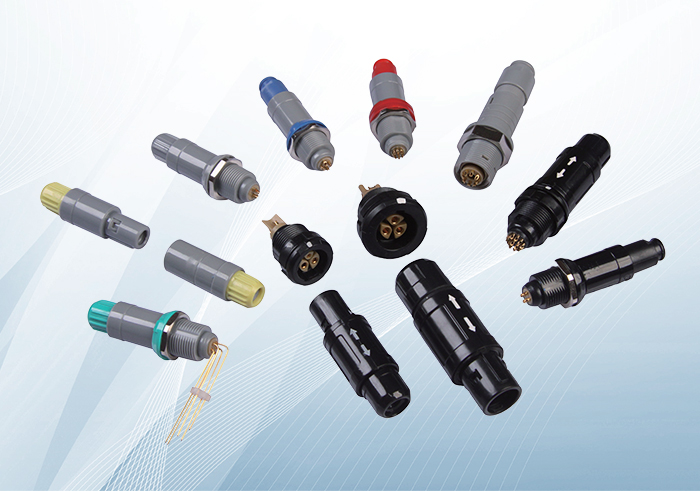
Available in multiple shell sizes including 0#, 1#, 2#, 3#, and 4#.
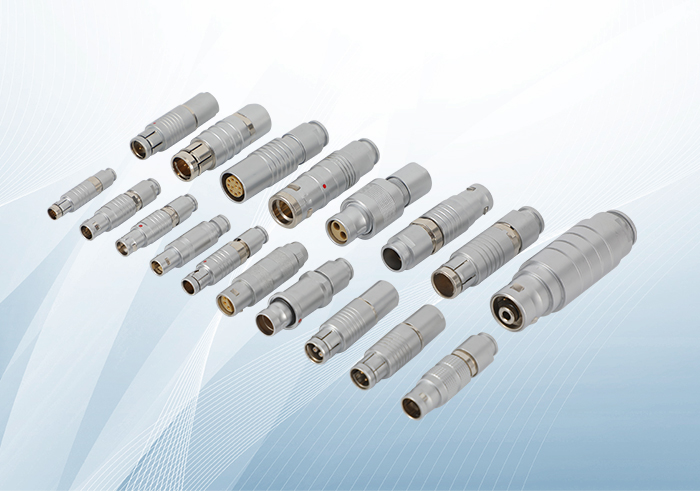
Available in multiple metal circular connector configurations covering commonly used shell sizes.
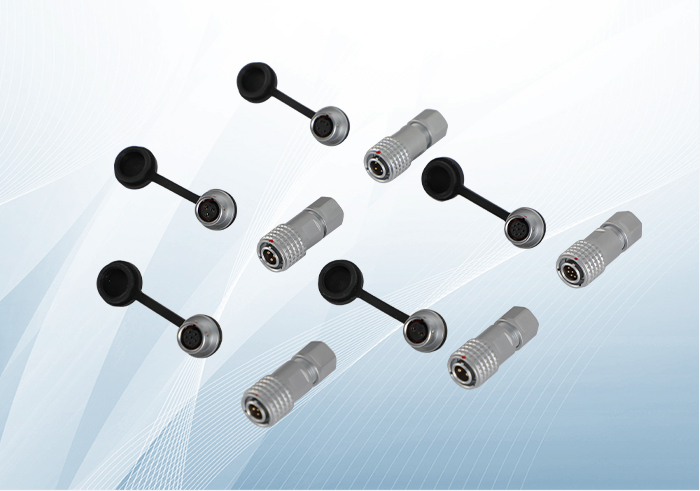
Compact connector families covering a range of shell sizes and configurations.
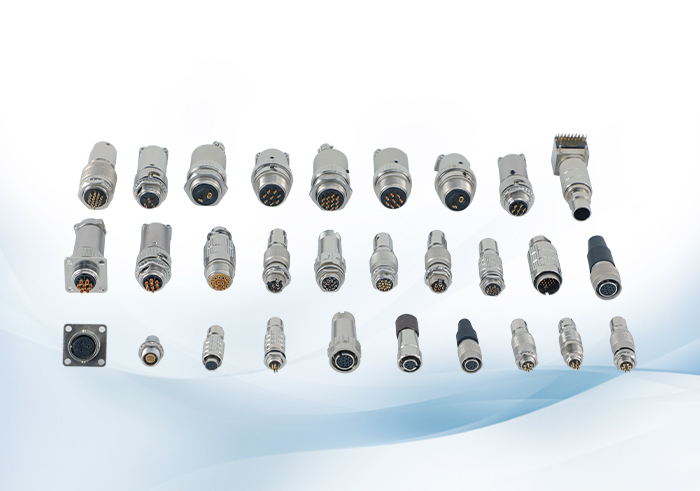
For customized equipment, panel mounting dimensions, cable outlet direction, termination method, and cable assemblies can also be evaluated according to project requirements.
5. Mechanical Mating Life
The required mating life depends heavily on the application. A connector used inside fixed industrial equipment may only be disconnected during maintenance, while connectors on medical instruments, testing equipment, or portable devices may be mated and unmated many times every day.
For this reason, mechanical life should be evaluated together with:
· Frequency of use
· Contact construction
· Housing material
· Locking mechanism
· Environmental exposure
· Electrical load during mating
High-voltage and high-current connectors may have different mating-life specifications from smaller signal connectors because of their larger contacts and mechanical structures.
Always refer to the datasheet of the exact model for the specified mating-cycle rating.
Other Quality Factors to Check
Electrical ratings alone do not determine connector quality. When evaluating a push-pull connector manufacturer, engineers and purchasing teams should also consider the following factors.
Contact and Housing Materials
Gold-plated contacts are commonly used where stable low-level signal transmission and good contact reliability are required.
Housing selection depends on the application.
Plastic housings can offer:
· Lower weight
· Electrical insulation
· Convenient color coding
· Suitability for many medical and instrumentation applications
Metal housings can offer:
· Higher mechanical strength
· Improved impact resistance
· EMI shielding options
· Suitability for demanding industrial environments
Quality Management and Product Compliance
For regulated or demanding industries, supplier qualification is also important.
Depending on your market and application, relevant considerations may include quality management systems such as ISO 13485 for medical-device manufacturing and IATF 16949 for automotive applications, as well as applicable product certifications and regulatory requirements.
Certification requirements should always be confirmed according to the exact product, application, and destination market.
SZCNT Push-Pull Connector Series at a Glance
Series | Housing | Contact Options | Protection | Key Features |
SZCNT02 | Plastic | Up to 32 contacts | IP50 / IP64 depending on model | Medical and instrumentation applications; multiple color/keying options |
SZCNT07 | Metal | Up to 64 contacts | IP50-IP68 depending on sub-series | Broad range of metal circular push-pull configurations |
SZCNT13 / SZCNT14 | Metal / Plastic | Approx. 2-30 contacts depending on series | Model-dependent | Compact designs with multiple connection and locking options |
SZCNT58-QC1 | Metal, shielded | High-voltage / high-current configurations | IP67 | 1000 V-class high-voltage push-pull application |
Because electrical and mechanical specifications vary between sub-series and individual models, always check the relevant datasheet before final selection.
Typical Applications of Push-Pull Self-Locking Connectors
Push-pull connectors are commonly considered for applications including:
· Medical monitoring equipment
· Endoscopic and diagnostic equipment
· Industrial automation
· Machine vision
· Test and measurement equipment
· Robotics
· Outdoor industrial systems
· New energy vehicles
· Energy storage systems
· Communication equipment
The optimal connector depends on the electrical requirements, mechanical installation, operating environment, and expected mating frequency.
Frequently Asked Questions
1. What Is the Maximum Current of a Push-Pull Connector?
There is no single maximum current for all push-pull connectors. Current capacity depends on the number of contacts, contact diameter, conductor size, connector design, and operating conditions.
Low-current signal contacts may be rated at only a few amperes, while power contacts can support considerably higher current. For power applications, provide the required current per contact when requesting a connector recommendation.
2. What Voltage Can a Push-Pull Connector Handle?
Voltage ratings vary significantly between connector series. Conventional signal and power connectors may operate in ranges such as 30 V to 250 V depending on their contact arrangement and insulation design.
For higher-voltage applications, dedicated high-voltage connectors should be selected. The SZCNT58-QC1 series is intended for high-voltage applications with configurations specified for up to 1000 V operating voltage.
Always check the rated voltage and dielectric withstand voltage of the exact model.
3. Are Push-Pull Connectors Waterproof?
They can be. Not every push-pull connector has the same IP protection level. Across different SZCNT series, configurations are available from IP50 to IP68.
· SZCNT02: IP50 / IP64 depending on model
· SZCNT07: multiple protection options depending on sub-series
· SZCNT13 / SZCNT14: model-dependent
· SZCNT58-QC1: IP67 configurations
For underwater, oil-contaminated, outdoor, or wash-down environments, provide detailed environmental requirements before choosing the connector.
4. How Do I Choose the Correct Connector Size?
Start with the equipment installation drawing. The most important dimensions include:
· Panel cutout
· Available installation depth
· Connector diameter
· Mounting thread or flange
· Cable diameter
· Cable outlet direction
· Number of contacts
If you provide these dimensions together with your electrical requirements, the connector manufacturer can narrow down suitable shell sizes much more quickly.
5. How Many Mating Cycles Can a Push-Pull Connector Withstand?
Mechanical life depends on the specific connector series and model. Some signal-oriented push-pull designs are intended for thousands of mating cycles, while larger high-voltage or high-current connectors may have lower specified mating-cycle values.
Mechanical-life testing is also different from real operating conditions. Frequent live mating, contamination, excessive side load, incorrect operation, or harsh environmental exposure may reduce actual service life.
Always confirm the mating-cycle specification and test conditions in the model datasheet.
Need Help Selecting a Push-Pull Connector?
Choosing the correct connector becomes much easier when the application requirements are clearly defined.
When contacting Shenzhen Connector Technology Co., Ltd. (SZCNT), provide the following information whenever possible:
1. Required number of contacts
2. Rated current
3. Rated voltage
4. Required IP rating
5. Panel cutout or installation dimensions
6. Cable diameter and wire size
7. Expected mating frequency
8. Operating temperature and environment
9. Signal, power, high-voltage, shielding, or other special requirements
10. Drawings or photos of the existing interface, if available
With these parameters, the SZCNT engineering team can identify a suitable standard connector or evaluate a customized connector solution for your application.